I just finished reading the book "Teach With Your Strengths" by Rosanne Liesveld and Jo Ann Miller. This is a professional development book for teachers to find their strengths and learn to use them to their fullest measure in their classroom.
Everyone is born with natural talents and it is our responsiblity to maximize them in every area of life. This book also details how many people will identify their weaknesses and spend countless hours and resources to make their weakness at best mediocre. Liesveld and Miller advises idenitification of natural "strengths" and learn how to put them to work in your classroom. An online strengths finder assessment is included with the purchase of the book so that you may easily identify your top 5 strengths and use the rest of the book as a coaching tool to improve teaching methods.
I plan to use the next few posts to journal on my strengths and how I might put them to work in my teaching
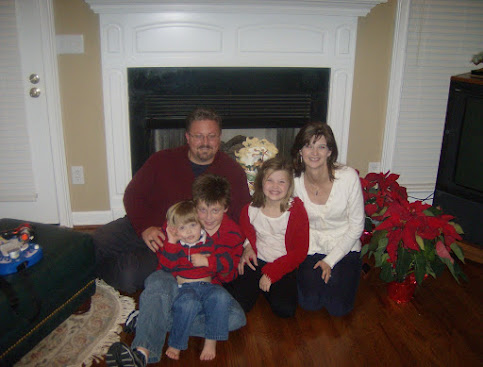
The 5 Chaps
Sunday, March 16, 2008


Saturday, March 15, 2008
Creating a Trust in Children
It is important, in order to create a classroom of investigative risk-takers in learning, that teacher work early to establish a trust factor in their children. As I blogged earlier, establishing respect is important and needed to create a safe structure; but connecting with our students relationally helps as well in creating a successful classroom.
First, to do this, I would love to send out a letter before school starts to the children in my class so they can feel that they already know me. Perhaps creating another blog for my classroom so students have the opportunity to connect to me early if they would like. On the first day of school, I plan to present a slideshow of me and things that I do and places I have traveled so that the kids can make an immediate connection. They will see that I am a real person; more than just their teacher.
Second, Be DRAMATIC. My family will tell you that I am the drama queen of the clan. I have learned the art of being a bit overzealous in different situations. Over the years, I have toned down and actually have turned into quite a serious person; but have I learned that my BIG facial expressions and sometimes silly ways to reach the kids when they least expect it, helps me to win some children over. One year, I believe I surprised the entire 3rd grade and staff when I broke out into a little rap about coin identification at a family math night. No one ever expected it and it ended up being requested again at the teacher staff meeting later. I guess I made quite a fun impression; but more importantly, I was able to connect to my students in a new way. Mrs. C. keeps them on their toes!
Finally, as children come in the first day I want to set very clear expectations by giving the "teacher" speech. I want children to know that my main objective is for them to learn and to give them the best education possible. I plan to give 100% and I expect them to give 100% as well. I want them to know how much I care and I will do whatever it takes for us to have a successful year.
First, to do this, I would love to send out a letter before school starts to the children in my class so they can feel that they already know me. Perhaps creating another blog for my classroom so students have the opportunity to connect to me early if they would like. On the first day of school, I plan to present a slideshow of me and things that I do and places I have traveled so that the kids can make an immediate connection. They will see that I am a real person; more than just their teacher.
Second, Be DRAMATIC. My family will tell you that I am the drama queen of the clan. I have learned the art of being a bit overzealous in different situations. Over the years, I have toned down and actually have turned into quite a serious person; but have I learned that my BIG facial expressions and sometimes silly ways to reach the kids when they least expect it, helps me to win some children over. One year, I believe I surprised the entire 3rd grade and staff when I broke out into a little rap about coin identification at a family math night. No one ever expected it and it ended up being requested again at the teacher staff meeting later. I guess I made quite a fun impression; but more importantly, I was able to connect to my students in a new way. Mrs. C. keeps them on their toes!
Finally, as children come in the first day I want to set very clear expectations by giving the "teacher" speech. I want children to know that my main objective is for them to learn and to give them the best education possible. I plan to give 100% and I expect them to give 100% as well. I want them to know how much I care and I will do whatever it takes for us to have a successful year.
Friday, March 14, 2008
Creating Structure
I believe that kids need and like having structure. They feel safe as they measure their boundaries. It is the teacher's and parent's responsibility to create a safe and secure classroom culture. One way to do this is to establish clear expectations. It is important for our children to like us and for them to feel that we love them. We do this through affirming them and encouraging them.
But it is also necessary that our children learn to respect us. Children will naturally test their boundaries so they are aware of what is accepted. As mentors to children, it is our responsibility to follow-through on consequences that have been set up as a result of an infraction to the rules.
This is hard when we love our kids so much and want to affirm them. And many times, we as mentors want affirmation back from them. It is difficult to risk their disappointment and receive a not so glowing report from them. However, as mentors to children, we are doing them a severe injustice of not setting safe boundaries and guidelines --and following through!!!
Our children crave structure and need to know what to expect!
But it is also necessary that our children learn to respect us. Children will naturally test their boundaries so they are aware of what is accepted. As mentors to children, it is our responsibility to follow-through on consequences that have been set up as a result of an infraction to the rules.
This is hard when we love our kids so much and want to affirm them. And many times, we as mentors want affirmation back from them. It is difficult to risk their disappointment and receive a not so glowing report from them. However, as mentors to children, we are doing them a severe injustice of not setting safe boundaries and guidelines --and following through!!!
Our children crave structure and need to know what to expect!
Life Lesson #6 Play "Mirror" in discussions
What is "Mirror" you ask? We should teach our children to mirror a conversation for courtesy. If you are asked a question in conversation, return the question.
Ex. If someone asks you "Did you have a good day?" Answer and ask a question in return.
"Yes, my day was great! How was your day?"
It is only polite to show others that you are just as interested in them as they are in you.
We should teach our children that a good discussion has an ebb and flow. The only way they will learn this valuable life lesson which will help them in the future is to model it yourself. Ask your children or student, "How was your day?" But expect them to return the favor by playing "Mirror" by saying "mirror, mirror on the wall..." After this favorite rhyme echoing through their ears a few times will lead them to develop very good manners.
Ex. If someone asks you "Did you have a good day?" Answer and ask a question in return.
"Yes, my day was great! How was your day?"
It is only polite to show others that you are just as interested in them as they are in you.
We should teach our children that a good discussion has an ebb and flow. The only way they will learn this valuable life lesson which will help them in the future is to model it yourself. Ask your children or student, "How was your day?" But expect them to return the favor by playing "Mirror" by saying "mirror, mirror on the wall..." After this favorite rhyme echoing through their ears a few times will lead them to develop very good manners.
Life Lesson #5- Bragging
Bragging will get you nowhere. It really is a sign of weakness. It is wonderful to excel, but many times if you "toot" your on horn; no one else will. I want to teach my children that when they are good at something; remain confident but yet humble. A boastful attitude can actually work against us. We need to give time for others to discover our abilities. When we do, our skills actually seem much larger when they are realized by others.
Tuesday, March 11, 2008
FOCUS CO-OP
FOCUS has been a blast! It is impossible to document off of the fun we have had, but here are a few highlights!
 |
 |
| Make a scrapbook - it's easy! |
Monday, March 10, 2008
Rule #4
During Discussions, respect others' comments, opinions, and ideas.
We must create a nonthreatening atmosphere where it is okay to make comments and ask questions. Without this, we discourage the spirit of inquiry and the excitement of learning as we focus on fear instead of learning. Children need to be trained to never laugh or make fun of someone's comments. It is okay to disagree, but children need to develop the art of being diplomatic in their discussions. Teach children to respond positively to a friend's ideas, but politely express how they may feel. I always say, "if you do not have anything positive to say, please say nothing at all."
We must create a nonthreatening atmosphere where it is okay to make comments and ask questions. Without this, we discourage the spirit of inquiry and the excitement of learning as we focus on fear instead of learning. Children need to be trained to never laugh or make fun of someone's comments. It is okay to disagree, but children need to develop the art of being diplomatic in their discussions. Teach children to respond positively to a friend's ideas, but politely express how they may feel. I always say, "if you do not have anything positive to say, please say nothing at all."
Subscribe to:
Posts (Atom)


